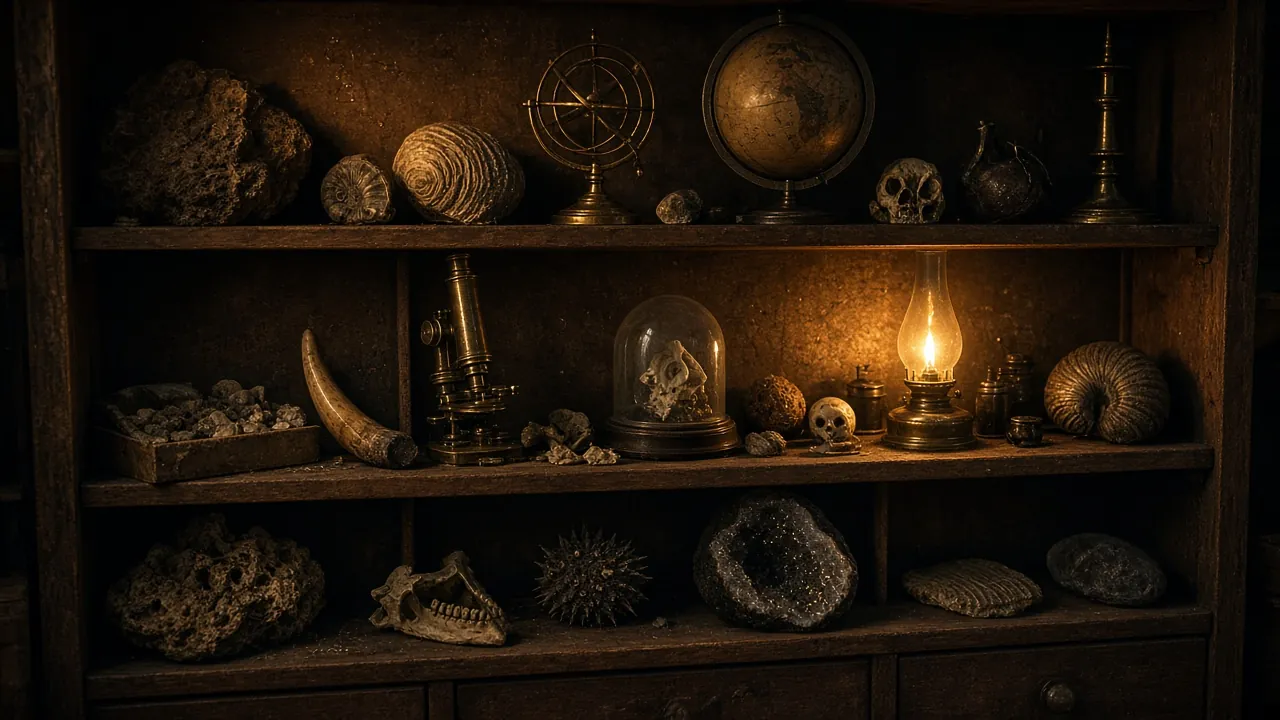
Twelve genuinely strange jobs from history, from knocker-uppers and leech collectors to the Groom of the Stool, toshers and human computers, and what they tell us about everyday life in the past.
Before alarm clocks, sewers and electric lights, someone had to do the jobs they now do for us. Many of these roles were dirty, dangerous or simply odd. Here are twelve that really existed.
1. Knocker-upper
In industrial Britain, before alarm clocks were cheap, knocker-uppers walked the streets before dawn, tapping on bedroom windows with long poles, or even using pea-shooters, to wake workers for their shifts. They were paid a small weekly fee, and the job survived in some towns into the 20th century.
2. Groom of the Stool
At the Tudor court, the Groom of the Stool attended the king in his most private moments, including on the "close stool", a portable toilet. That intimacy brought real power: under Henry VIII, the Groom was one of the most trusted people at court. The title survived in a changed form until it was ended in 1901.
3. Leech collector
Doctors used leeches for bloodletting well into the 19th century. Collectors, often women, waded into ponds and let leeches attach to their bare legs, then picked them off. It was unpleasant and could cause blood loss and infection.
4. Tosher
In Victorian London, toshers searched the sewers for coins, metal and other valuables. The journalist Henry Mayhew interviewed them in the 1850s. They worked in groups for safety, as the tunnels risked collapse, flooding and dangerous gases.
5. Mudlark
Mudlarks scavenged the Thames foreshore at low tide for coal, rope, iron and anything they could sell. Many were children. Today, "mudlarking" survives as a hobby, though you need a permit from the Port of London Authority to search the Thames foreshore in London.
6. Pure finder
Victorian "pure finders" collected dog dung from the streets and sold it to tanneries, where it was used to treat leather. Mayhew recorded this trade too.
7. Rat-catcher
Cities overrun with rats needed professionals. Jack Black, who styled himself rat-catcher to Queen Victoria, became famous for handling rats, and sold some as pets, helping popularise fancy rats.
8. Resurrection man
Before the Anatomy Act 1832 provided medical schools with legal access to bodies, demand for corpses for dissection was met partly by body snatchers who dug up fresh graves. Some families used iron cages called mortsafes to protect graves.
9. Lamplighter
Lamplighters lit and extinguished gas street lamps each evening and morning, using long poles. A small number of gas lamps in London are still maintained today.
10. Human computer
Before electronic computers, "computers" were people, often women, who carried out complex calculations by hand for astronomy, engineering and war work. At NASA and its predecessor, human computers such as Katherine Johnson calculated flight paths for early space missions.
11. Ice cutter
Before refrigeration, workers cut blocks of ice from frozen lakes and stored them in insulated ice houses. Ice was also shipped long distances, including from Norway and North America to Britain.
12. Switchboard operator
Early telephone calls were connected by hand by operators, often women, plugging cables into switchboards. Automatic exchanges gradually replaced them during the 20th century.
What these jobs tell us?
Many strange jobs filled gaps that technology, public health and regulation later closed. They're a reminder of how much everyday life depended on hard, often dangerous work by ordinary people.
Many of these workers left few records of their own. Much of what we know comes from investigators such as Mayhew, from newspapers and from census returns, where occupations were listed for each household. If you're researching your family history, unusual job titles in the census are often the first clue to stories like these.
Sources and further reading
- Project Gutenberg: Henry Mayhew, London Labour and the London Poor
- Port of London Authority: Foreshore permits
- NASA: Katherine Johnson
- Wikipedia: Groom of the Stool
- Wikipedia: Knocker-up
Facts checked on 20 October 2026. Spotted an error? Tell us and we will correct it.
Chris is a freelance writer and editor covering a wide range of topics with a focus on accuracy and depth.
Last updated: 2026-04-25 · Fact-checked by editorial team